SITUATION
Public Protection Matters
With over 83,000 members and 36 chapters, Professional Engineers Ontario is a statutory licensing organization founded in 1822 to regulate the practice of professional engineering in the province of Ontario.
The member based organization needs to improve the online experience for its key stakeholders, community and its membership. Simplified communications on the licensing process, member directory and their key mandate of regulatory affairs is needed.
SERVICES
- Stakeholder engagement
- Design thinking sessions
- Communications strategy
- Technology roadmapping
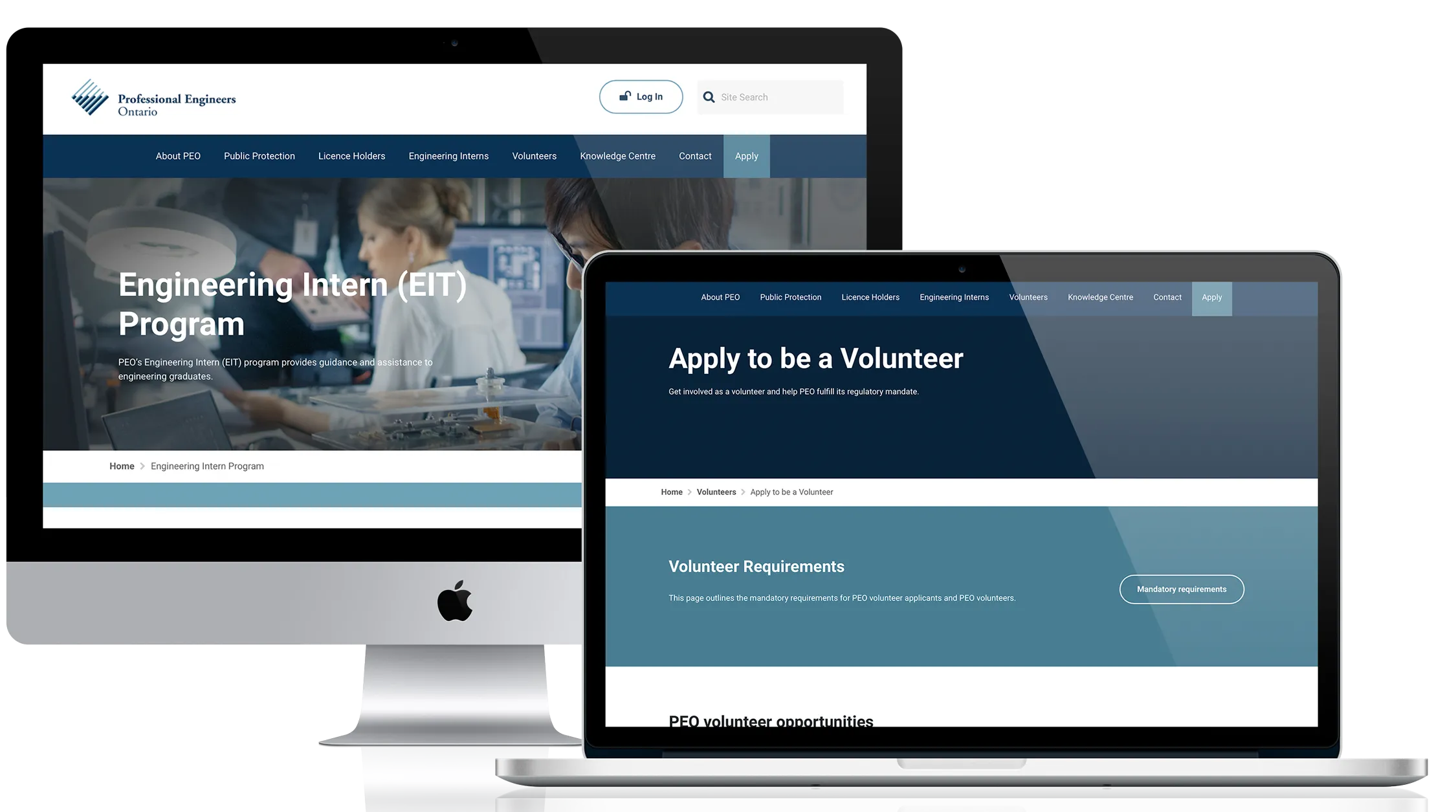
- Responsive website design
- Content management system
- Payment processing
- Form management
- Resource centre
- Membership directory
- Content planning
- Content publishing
- Training & support
- Hosting services

SOLUTION
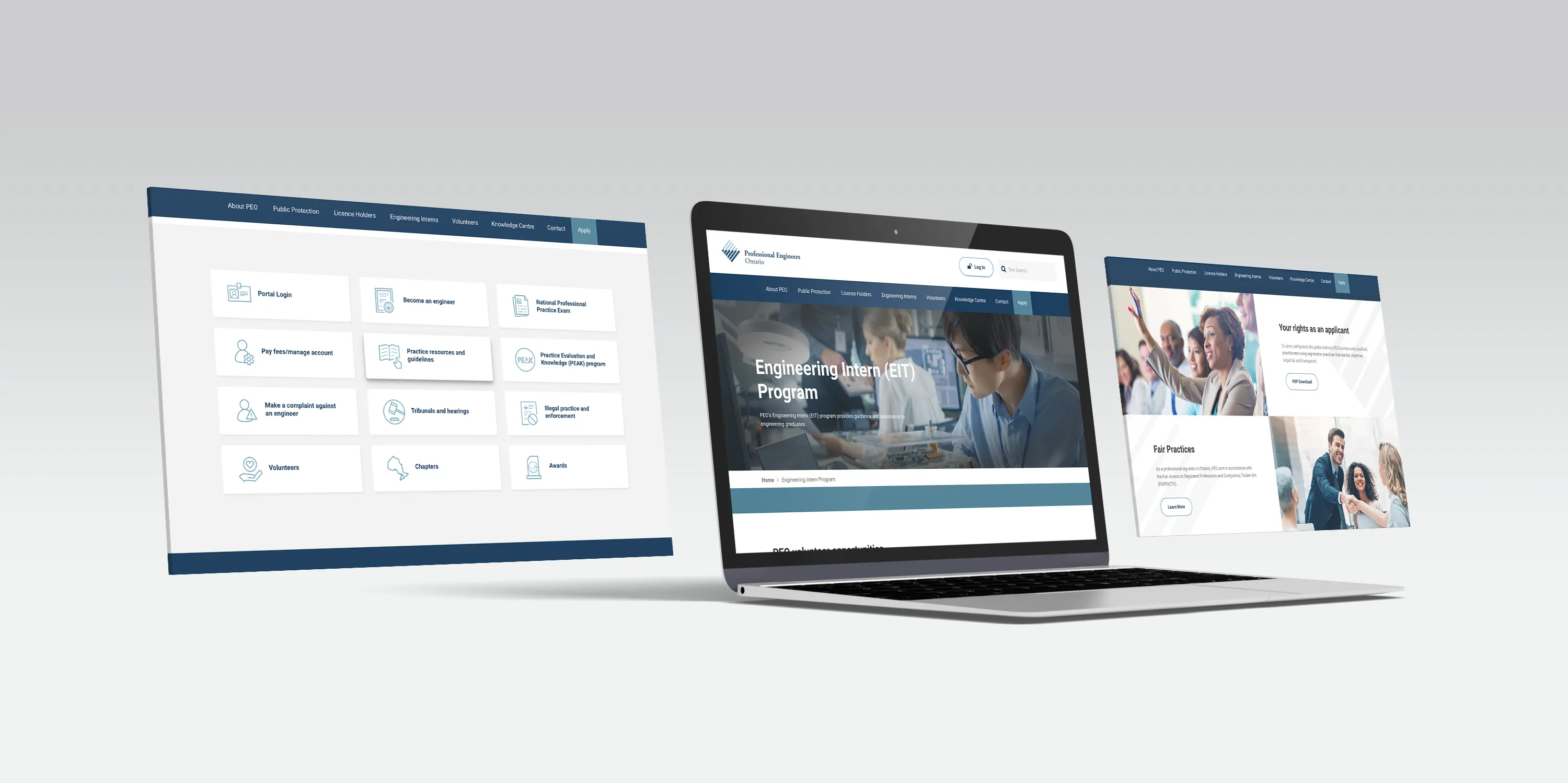
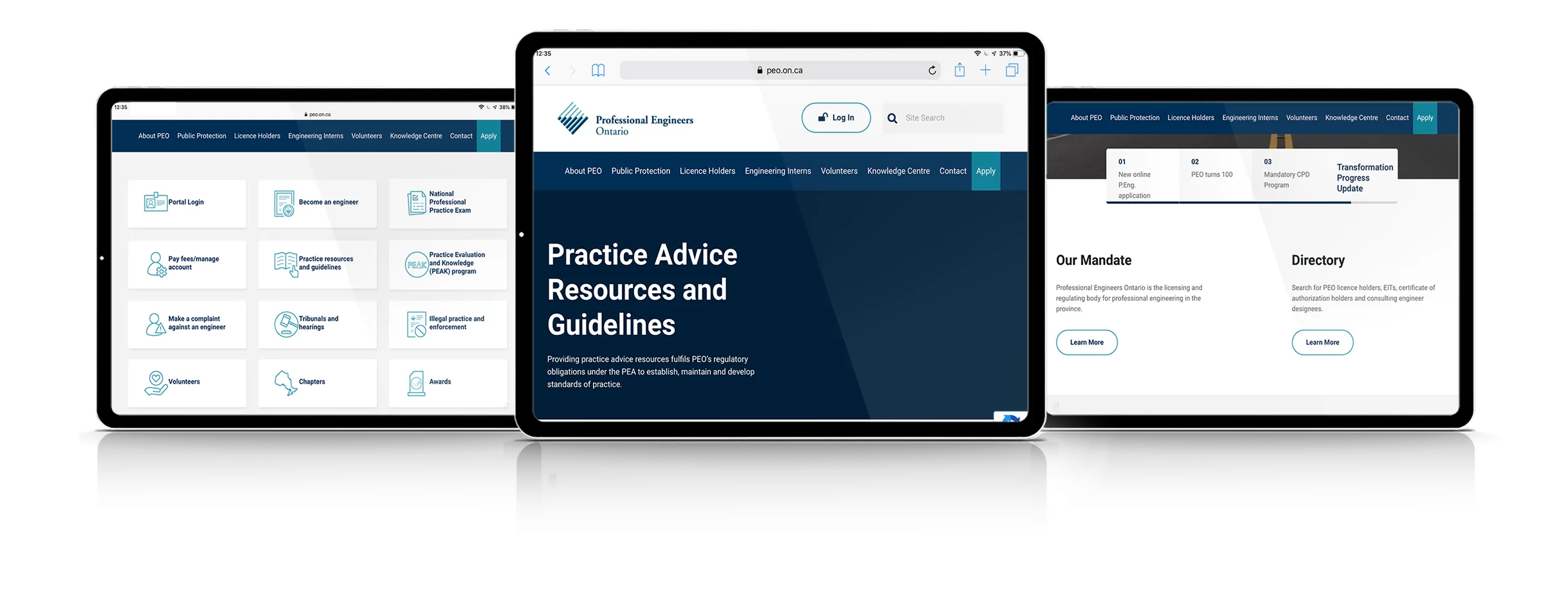
A new system is developed with a focus on information architecture, ease of navigation, a refined directory, and a simplified design to support an information intensive organization.


SUCCESS
With design thinking sessions engaging all internal and external audiences in a unique process of collaborative design, the website simplifies a complex licensing process. The new information architecture benefits all stakeholders and allows for mass information to be easily and efficiently posted by internal content publishing teams.

COLLABORATIONS
 Case Study
University of Toronto
Platform recommendations, technology roadmapping, and user interface design concepts were provided with further strategic consultations and guidance for implementation.
 Case Study
The Cooperators
A legacy system is in need of a significant overhaul and upgrade. There is need to create a responsive system for credit union staff, a mobile friendly app experience for sales reps, and an improved online experience.
 Case Study
York University
York University, one of Canada's largest universities and a premier education and public research campus located in the heart of Toronto.